

Community education campaigns
A community education campaign shares a simple, consistent message across several channels, such as social media, posters, local media and events, to raise awareness of a health issue and encourage healthier behaviour.
This page starts with a free campaign kit on the Australian Alcohol Guidelines, followed by how to plan, run and measure your own campaign. It’s for community groups, councils, schools, sports clubs and other local organisations. For campaign ideas on specific topics, see the prevention toolkits on Supporting teenagers, Alcohol and pregnancy, AOD and older adults, AOD and young adults, Healthy workplaces, and Community action on alcohol availability.
Campaign kit: Take the guesswork out of drinking
This ADF campaign raises awareness of the Australian Alcohol Guidelines from the National Health and Medical Research Council (NHMRC). Aim it at adults generally, or at a group such as parents of teenagers. You’re welcome to translate the social media messages. You’re welcome to translate the social media messages. For any other changes, including co-branding, contact the ADF.
Key messages
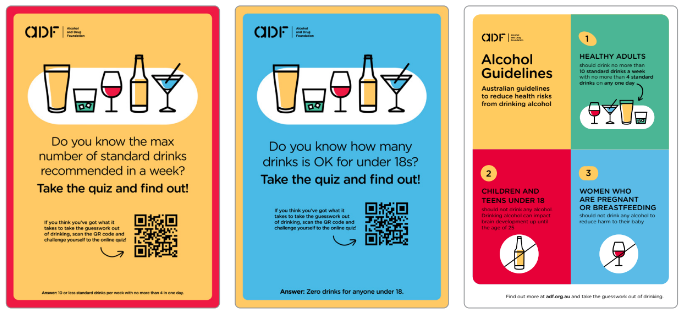
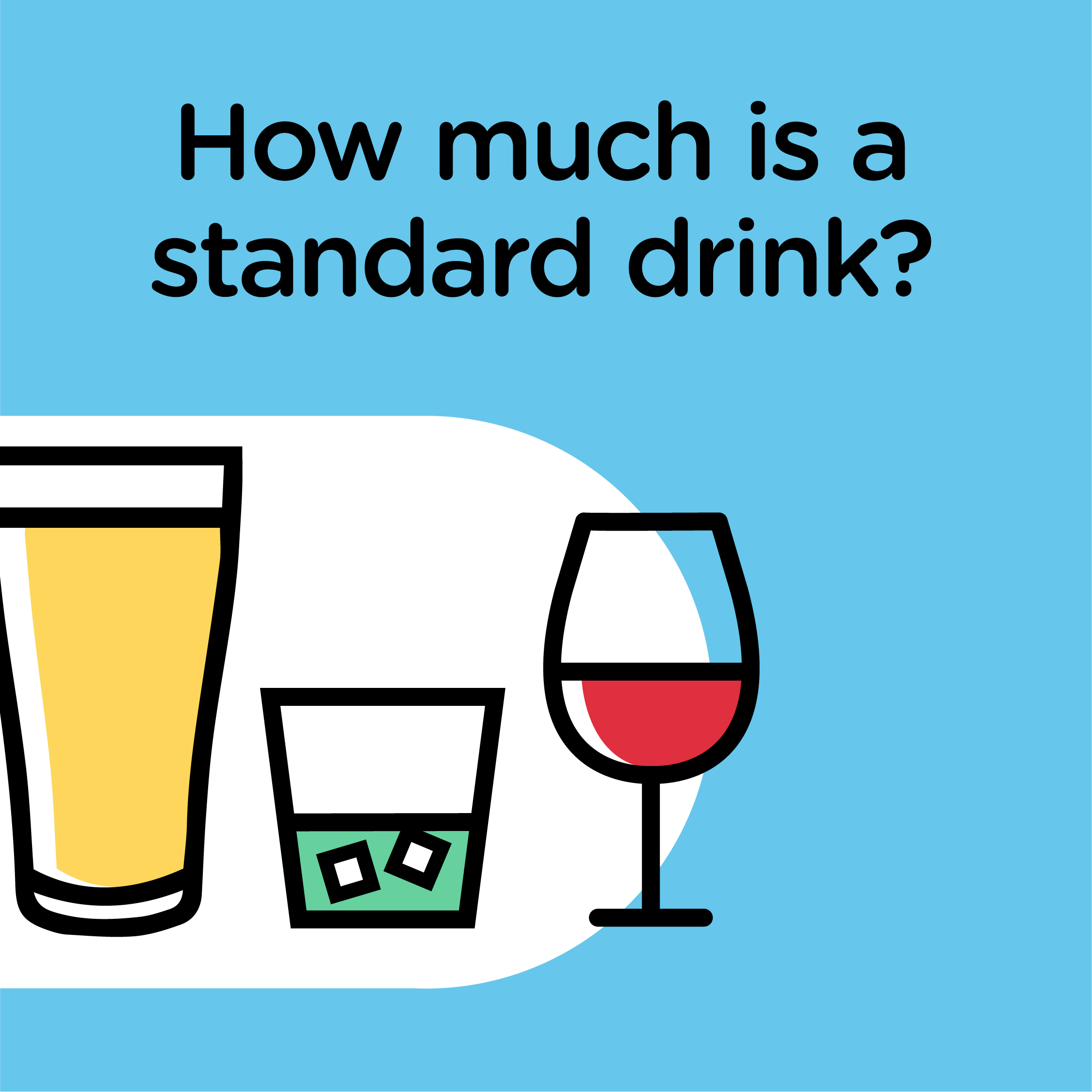
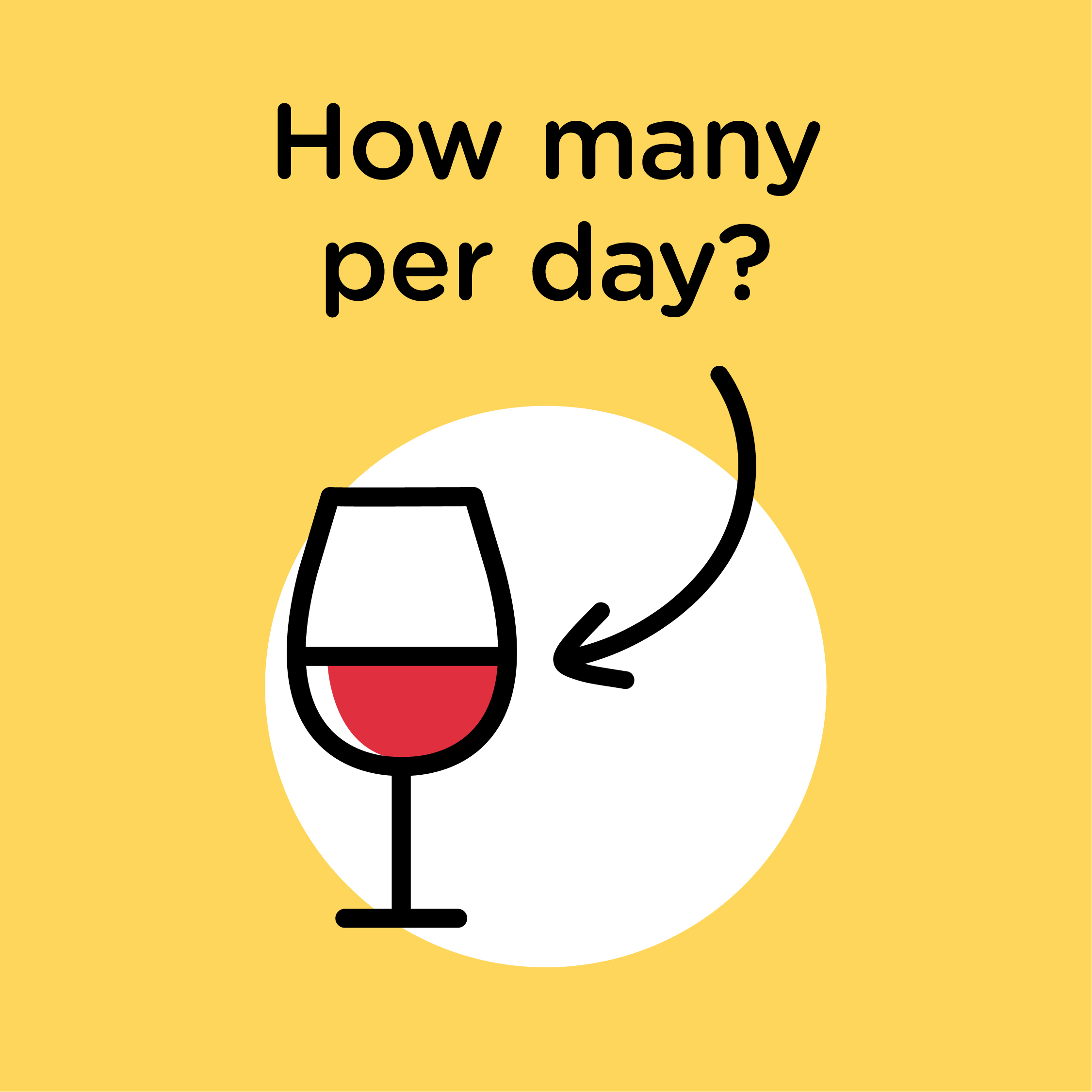
- Healthy adults should drink no more than 10 standard drinks a week and no more than 4 standard drinks on any one day, to reduce the risk of harm from alcohol-related disease or injury.
- People under 18 should not drink alcohol, to reduce the risk of injury and harm to the developing brain.
- Women who are pregnant or planning a pregnancy should not drink alcohol, and not drinking is safest for women who are breastfeeding.
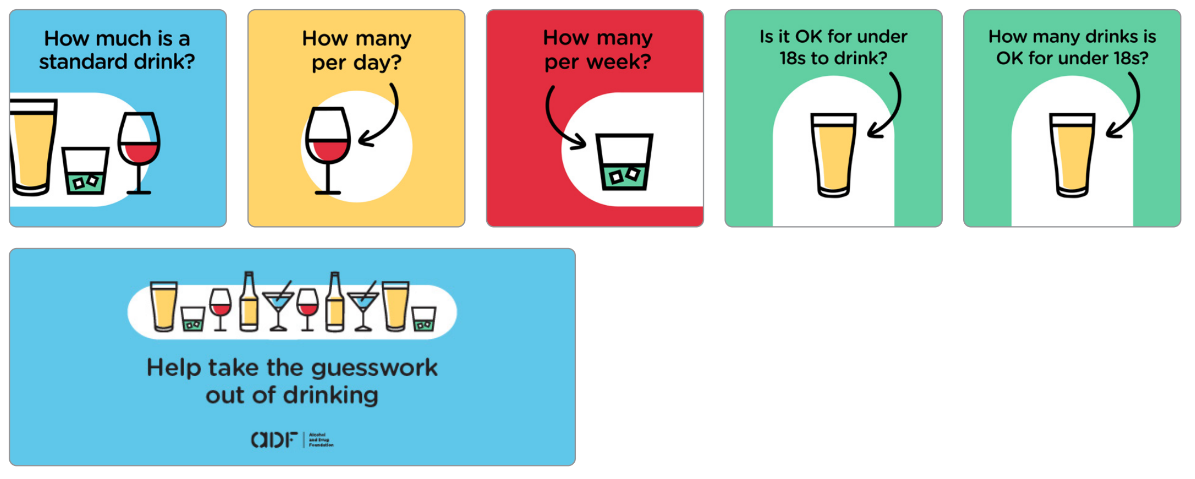
NHMRC Alcohol Guidelines 30 second video
Messages to copy:
- Do you know the Australian Alcohol Guidelines? Healthy adults should drink no more than 10 standard drinks a week and no more than 4 on any one day to reduce the risk of harm from disease or injury. Find out more: adf.org.au/reducing-risk/alcohol/alcohol-guidelines
- Anyone under 18 should not drink alcohol, to reduce the risk of injury and harm to the developing brain, which keeps developing until about age 25. Find out more: adf.org.au/reducing-risk/alcohol/alcohol-guidelines
- Women who are pregnant or breastfeeding should not drink alcohol, to prevent harm to their baby. Find out more about the Australian Alcohol Guidelines: adf.org.au/reducing-risk/alcohol/alcohol-guidelines
Posters and fact sheets
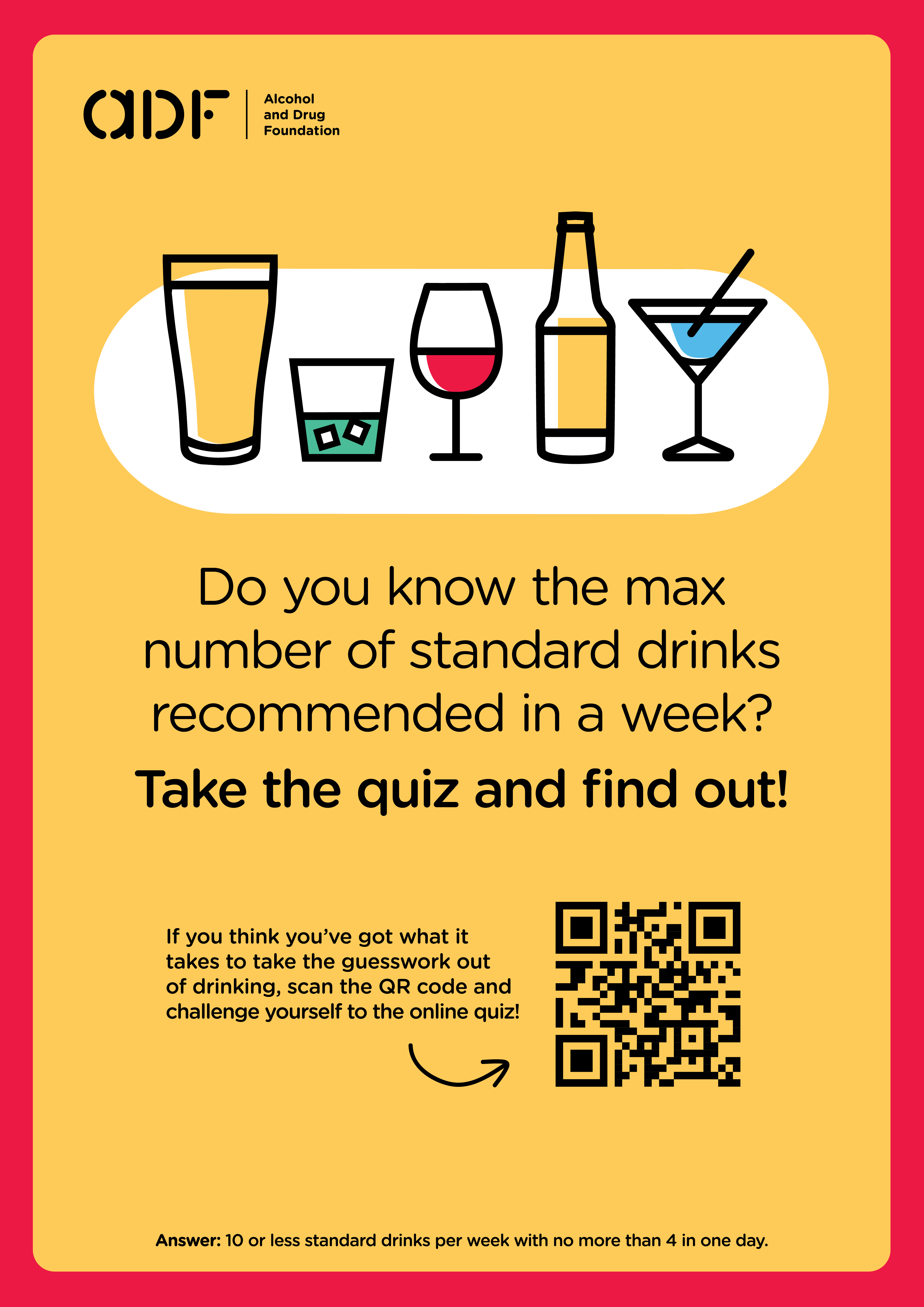
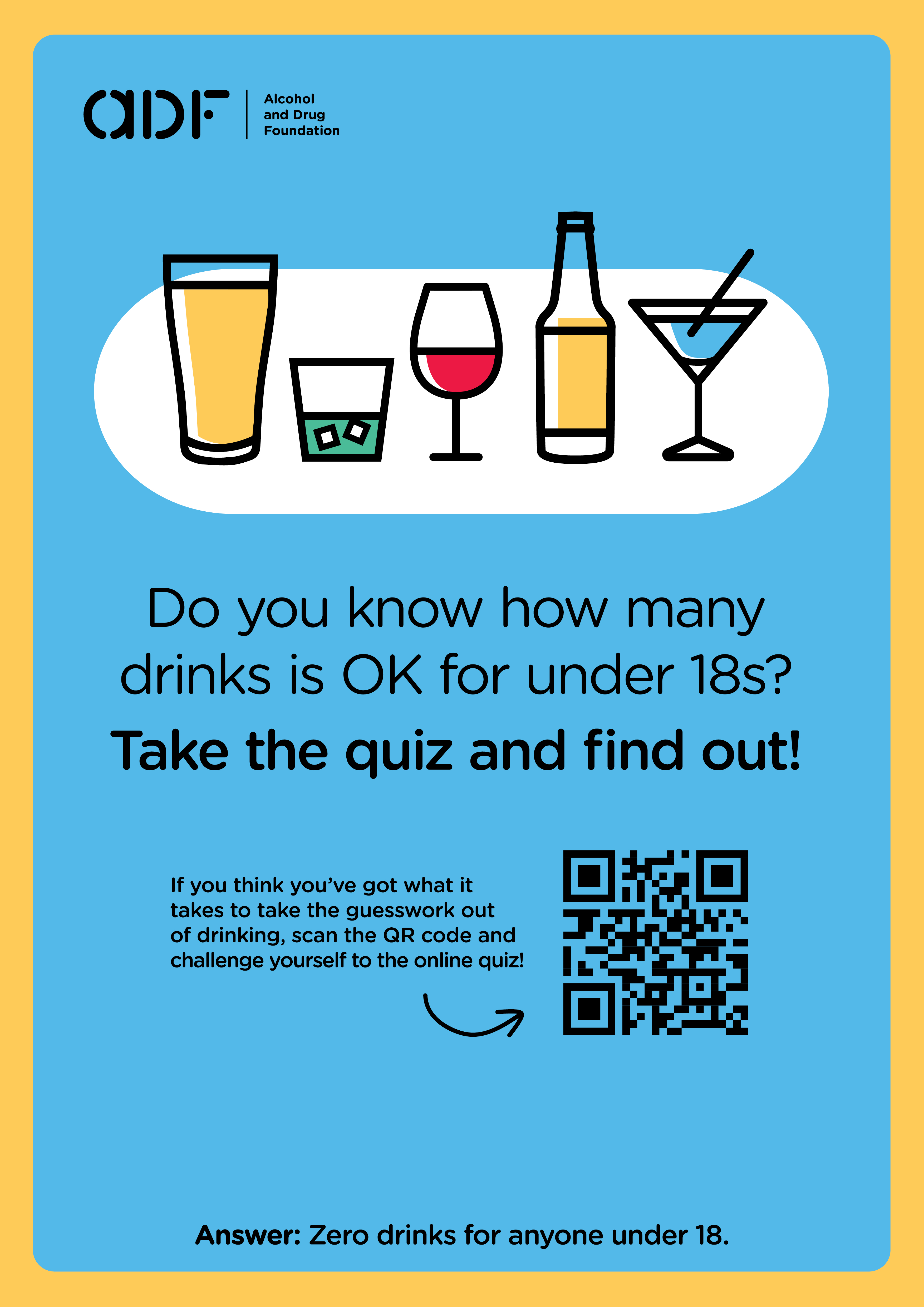
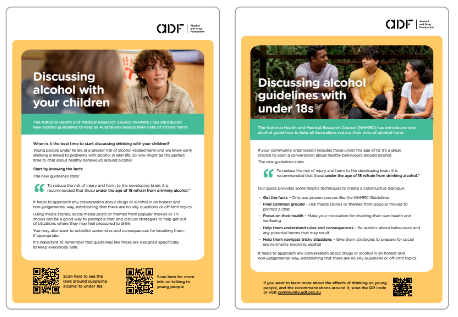
Two posters link by QR code to a short quiz on the guidelines; the third summarises all three. The fact sheets help parents and community organisations talk with young people about alcohol.
Templates for partners and media
Download the Word templates, or copy the text below.
To share your campaign with partners, put the tiles, messages and posters in a shared folder and send them the link with the stakeholder email.
A new campaign has just launched in <AREA> to raise awareness of the Australian Alcohol Guidelines, run by <PARTNER ORGANISATIONS>. Did you know that, to reduce your risk of harm from disease or injury, healthy adults should drink no more than 10 standard drinks a week and no more than 4 standard drinks on any one day? Anyone under 18 shouldn’t drink alcohol, to reduce the risk of injury and harm to the developing brain, which keeps developing until about age 25. And women who are pregnant or breastfeeding shouldn’t drink any alcohol, to prevent harm to their baby. Find out more at adf.org.au/alcohol-guidelines.
Why campaigns work
Campaigns that encourage behaviour change are an important part of reducing alcohol and other drug (AOD) harm. A short local campaign won’t change long-term habits on its own, but it can increase people’s knowledge and awareness, and lasting change comes from sustained effort over years. People are also at different stages of change, from not yet thinking about it to keeping up a new habit, so messages that suit different stages help people change at their own pace.
Proven alcohol campaigns include the ADF Drinking Guidelines campaign (in the kit above), Alcohol. Think Again, Reduce Your Risk and Every Moment Matters. Campaign materials are protected by copyright, so check each campaign’s terms of use and ask its creator before you use or adapt them.
Guiding principles
- Target a specific behaviour in a clearly defined audience, such as adults who drink in your community.
- Choose the channels that best reach that audience.
- Set your process and impact measures from the start.
- Show the benefits of changing: “why change” works better than only “how to change”.
- Avoid scare tactics, which can cause distress and make people switch off.
- Keep messages simple, memorable and based on the latest evidence.
- Use person-first, non-stigmatising language. See Language Matters, the Power of words and the Drug Stigma Message Guide.
Helping parents have a conversation about alcohol with children and teenagers
Plan your campaign
Start with the 5Ws: what you want to happen, who it’s for, why (the outcome), when, and where.
Then choose a mix of channels: social media and local online groups, local media and community radio, posters and flyers where the behaviour happens (such as near bottle shops and venues), and events or stalls. Plan around key dates, such as FebFast or International FASD Awareness Day, and avoid school holidays and busy local periods.
You’ll need a small team and volunteers, printed and digital materials, and partners who can share your message or host events.
For more help, see How to promote your community activities, How to get local media coverage and How to build community partnerships.
Run and measure your campaign
Keep talking with your community and partners while the campaign runs, and track your progress. If a post isn’t reaching people, try a different tile or a video, or ask partners to share it. You can also pay to boost a post on Facebook or Instagram; even $50 to $100 helps (see Meta’s help on boosting a post).
Measure two things:
- process: what you produced and how many people it reached
- impact: what changed in people’s knowledge, attitudes, intentions and help-seeking.
For detailed guidance, see Evaluate your community activities.
- Outputs and reach: how many radio announcements were broadcast, and how many listeners the station reaches; how many ads ran, and how many people pass those places; how many posts were shared, and how many people saw, liked or commented on them.
- Knowledge: did people know more about the alcohol guidelines after your campaign?
- Attitudes: were people more likely to agree that adults shouldn’t supply alcohol to under-18s?
- Intention: did people plan to change their drinking?
- Help-seeking: do people know where to get help to change their drinking, or to support someone else?
For Local Drug Action Teams
If you’re part of an LDAT, you can include a campaign in your Community Action Plan (CAP) and use some of your CAP funding for it: check the funding guidelines on the LDAT platform. For campaign measures that meet CAP requirements, see the LDAT evaluation tools, and talk to your Relationship Manager about translating or co-branding the materials.
Campaign checklist
- key messages (essential)
- evaluation measures (essential)
- social media tiles, messages and video
- website banner, website text and newsletter text
- posters, handouts and fact sheets
- stakeholder kit and email
- media release, pitch email and community radio script.
- World Health Organization. Ottawa Charter for Health Promotion. Geneva: WHO; 1986.
- Davis R, Campbell R, Hildon Z, Hobbs L, Michie S. Theories of behaviour and behaviour change across the social and behavioural sciences: a scoping review. Health Psychology Review. 2015;9(3):323–44.
- Donovan R, Henley N. Principles and practice of social marketing: an international perspective. Cambridge University Press; 2010.
- Australian Institute of Health and Welfare. National Drug Strategy Household Survey 2022–2023: risky alcohol consumption. Canberra: AIHW; 2024.
- Stockings E, Bartlem K, Hall A, Hodder R, Gilligan C, Wiggers J, et al. Whole-of-community interventions to reduce population-level harms arising from alcohol and other drug use: a systematic review and meta-analysis. Addiction. 2018;113(11):1984–2018.
- Hastings G, Stead M, Webb J. Fear appeals in social marketing: strategic and ethical reasons for concern. Psychology and Marketing. 2004;21(11):961–86.
- Gardner LA, Smout S, Teesson M, Champion KE, Newton NC, Chapman C. Prevention of alcohol and other drug use and harm: consultation paper. 2020.
- Akbar M, Ndupu L, French J, Lawson A. Social marketing: advancing a new planning framework to guide programmes. RAUSP Management Journal. 2021.
Last reviewed: November 2026