

The drug triangle
The drug use triangle, often called the drug triangle, is a simple model showing that the effects and harms of alcohol and other drug use depend on three things together: the drug, the person using it, and the environment they're in.
The same idea is also called the public health model, the interaction model, or "set, setting and drug".
No single factor explains why the same drug affects people differently, or why some situations carry more risk than others. Looking at all three helps communities understand alcohol and other drug harm, and where prevention can make a difference.
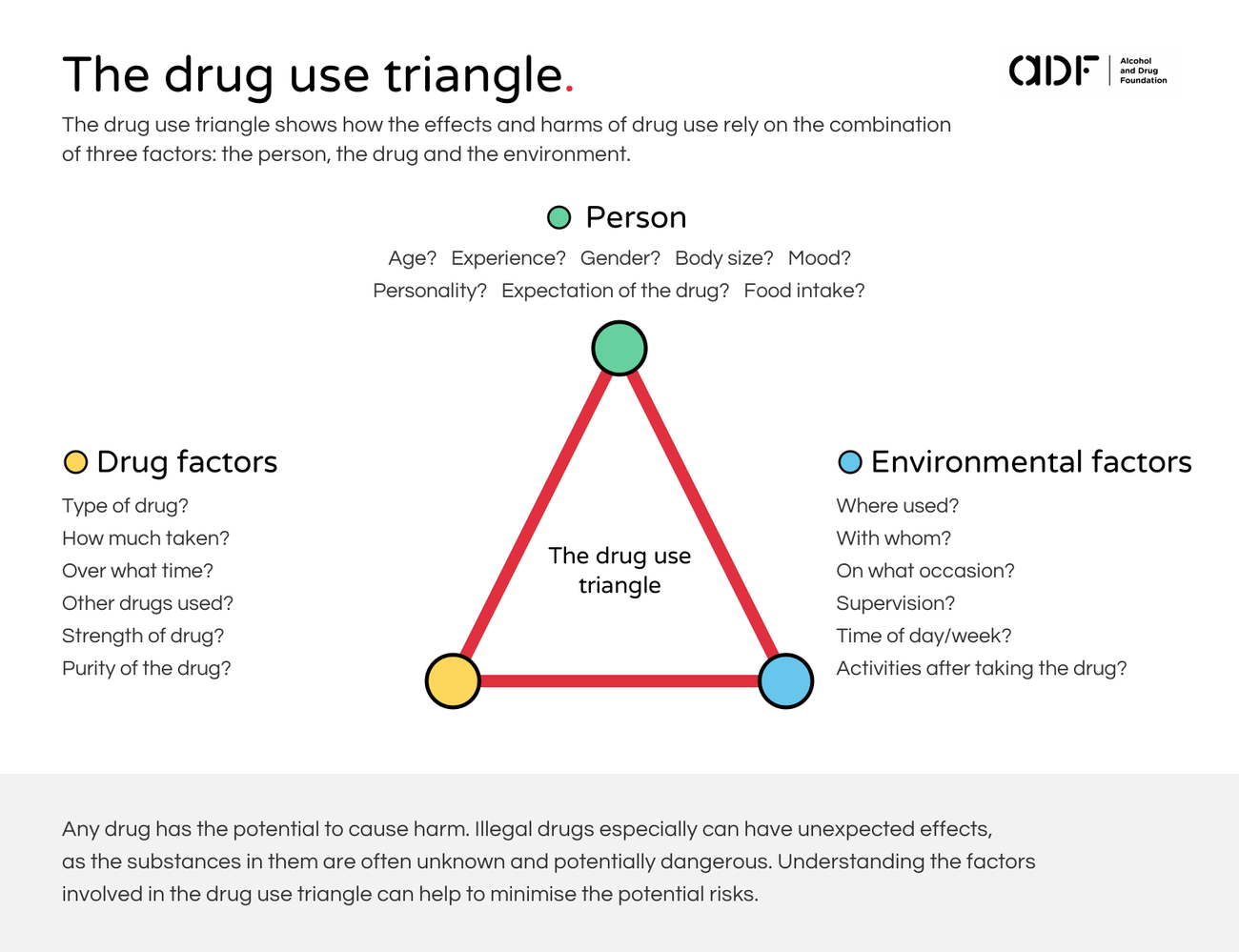
What are the three parts of the drug triangle?
The drug
The type of drug, how much is used and over what time, its strength and purity, how it's taken, how often it's used, and whether it's mixed with alcohol, medicines or other drugs. ADF's Drug Facts explain the effects and risks of each drug, and the Drug Wheel groups drugs by how they affect the body.
The person
The person's age, body size and health, their mood and expectations, their personality, whether they've used the drug before, and whether they've eaten.
The environment
Where the person is, when, and who they're with. This includes the occasion, such as a party, a venue or home, whether there's supervision, and what they do afterwards, such as driving. For prevention, the environment also includes the wider community, such as how easy alcohol and other drugs are to get, how they're promoted, and what's seen as normal.
How communities can use the drug triangle
The drug triangle shows that prevention doesn't have to focus only on the drug. Communities can strengthen what protects people on all three sides:
- the person: build young people's skills, confidence and connection through mentoring, peer support and parenting programs
- the environment: make local places safer and more supportive, including supervision at events, and have a say on how easily alcohol is available through liquor licensing
- the drug: share accurate information about alcohol and other drugs and their effects.
To learn more, see prevention strategies for young people, alcohol and young people and alcohol laws for community groups. If you're part of a Local Drug Action Team, you can build these activities into your Community Action Plan (CAP).
Download the drug triangle diagram
Use the diagram as a handout or in your training slides.
- Australian Government Department of Health, Disability and Ageing. What are the effects of taking drugs? Canberra: Australian Government.
- Centre for Youth AOD Practice Development. Public health or health care model. YouthAOD Toolbox.
- Drug Aware. What are the impacts of drugs on your life? Perth: Mental Health Commission, Government of Western Australia.
- Positive Choices. Harm reduction: set, setting, drug. Matilda Centre for Research in Mental Health and Substance Use, University of Sydney.
Last reviewed: November 2026